
Populism has become a powerful force in global politics, influencing elections and shifting political landscapes. This edition explores what populism is, where it originated, and how it shapes democracy today. While populist leaders claim to represent the “common people” against elites, their policies often oversimplify complex issues and can lead to authoritarian tendencies. From historical populist movements in the U.S. to modern-day leaders like Donald Trump, Bernie Sanders, and Rodrigo Duterte, the issue examines how populism can both empower and endanger democratic institutions.
✅ Explains a Key Political Trend – Populism is shaping elections and political movements around the world.
✅ Encourages Debate on Democracy – Should populist leaders be celebrated for challenging elites or criticized for weakening democratic institutions?
✅ Connects Past & Present – Helps students compare historical populist movements to modern leaders.
✅ Teaches Media Literacy – Encourages students to analyze how populist messaging influences public opinion and social media.
📌 Debate Exercise – Can populism be a force for good, or does it always lead to authoritarianism?
📌 Case Study Analysis – Compare historical populist leaders like Huey Long and FDR to modern examples like Trump or Sanders.
📌 Political Campaign Breakdown – Analyze how 2024 election candidates use populist messaging in their campaigns.
📌 Media Literacy Project – Have students analyze how news and social media frame populist leaders and movements.
This edition provides a timely discussion on one of the most influential political trends today, making it ideal for government, history, and social studies courses
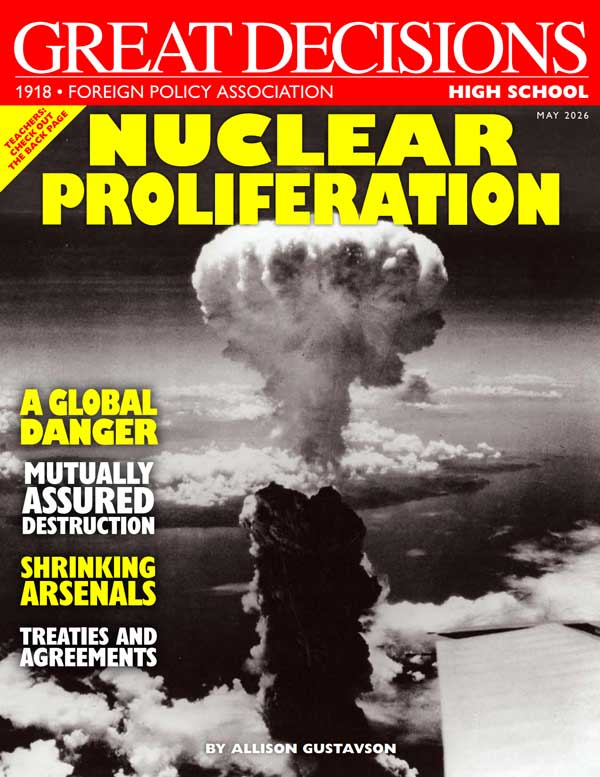
Download a free Nuclear Proliferation lesson plan for high school students from the Foreign Policy Association. Includes background reading, debate prompts, and classroom activities. Teach Nuclear Proliferation with a Ready-to-Use High School Resource Give your students a clear, engaging introduction to one of the most consequential global security issues of the modern era. This free […]

Download a free Ukraine war lesson plan for high school students from the Foreign Policy Association. Includes background reading, debate prompts, and classroom activities. Teach the Ukraine War with a Ready-to-Use High School Resource Give your students a clear, balanced understanding of one of today’s most important global conflicts. This free downloadable PDF from the […]
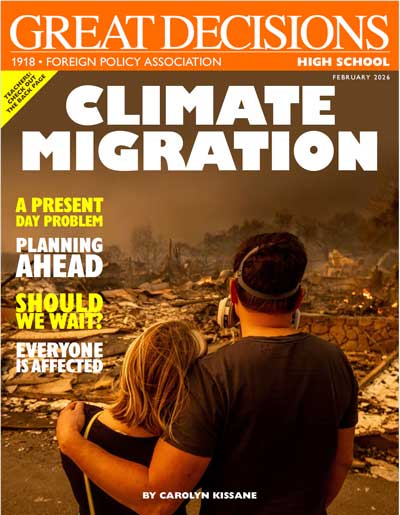
A free, classroom‑ready resource from the Foreign Policy Association Climate migration is no longer a distant or hypothetical concern. Around the world—and increasingly in the United States—people are being forced to leave their homes due to wildfires, flooding, rising sea levels, extreme heat, and other climate‑related disruptions. This Great Decisions High School issue helps students […]
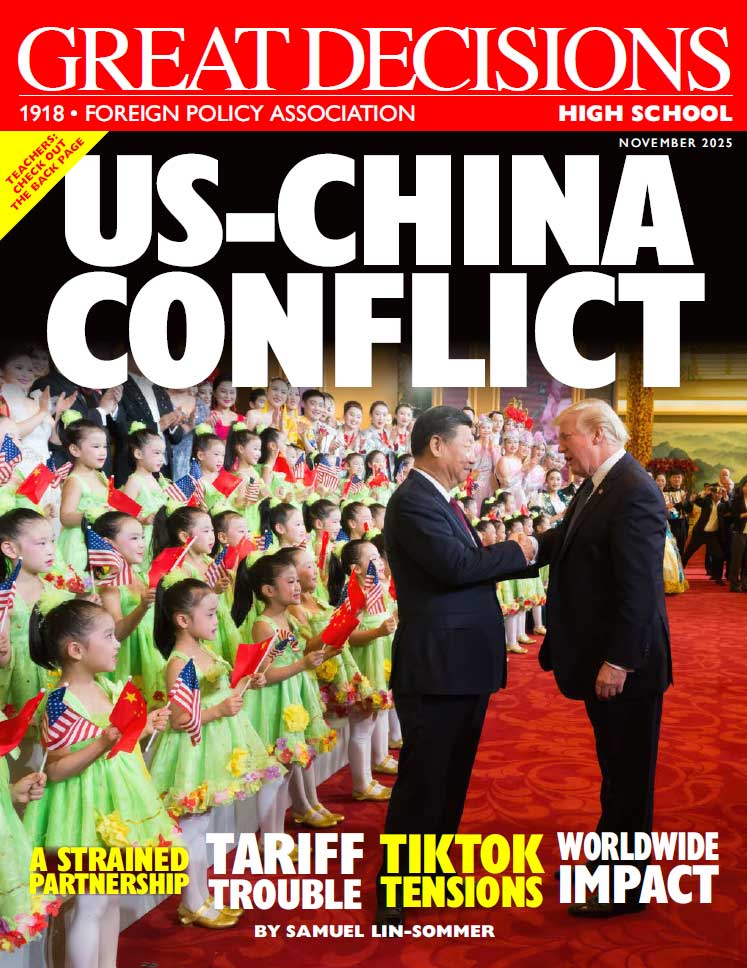
U.S.–China Relations: Competition or Cooperation? The U.S. and China stand at the center of today’s most consequential global relationship—one that shapes trade, technology, security, and the future of international leadership.Great Decisions: U.S.–China Relations, a free classroom resource from the Foreign Policy Association, helps students explore the history, tensions, and interdependence between these two nations through […]

Immigration: Then, Now, and What’s Next Immigration is at the heart of the American story—and a vital part of today’s most pressing debates. Great Decisions: U.S. Immigration, a free classroom resource from the Foreign Policy Association, helps students explore the complexities behind the headlines with empathy, historical context, and real-world data. This issue explores questions […]

As artificial intelligence reshapes education and the world beyond, high school teachers have a powerful opportunity to help students think critically about the tools they’re already using. Great Decisions: AI + Education, a free resource from the Foreign Policy Association, is designed specifically for classroom use—and it’s ready to plug into your curriculum. This issue […]

Bring Global Affairs to Life in Your Classroom Engage Your Students with Great Decisions High School: India & the United States The Great Decisions High School program offers an exciting, thought-provoking way to introduce students to key global issues. This edition—India & the United States—explores the growing partnership between two of the world’s most important […]

The way we produce, consume, and waste food plays a significant role in climate change and environmental sustainability. This edition explores how food systems contribute to greenhouse gas emissions, the impact of food waste, and solutions to reduce our environmental footprint. With one-third of all food globally wasted, the issue highlights how composting, plant-based diets, […]

The number of teens experiencing clinical depression, anxiety, and feelings of hopelessness has risen dramatically in the past decade. This edition explores the complex causes behind the teen mental health crisis, including the impact of social media, pandemic isolation, and cultural shifts in adolescence. Experts debate whether the rise in digital interactions and less in-person […]

The Korean Peninsula remains one of the most divided and geopolitically tense regions in the world. This edition explores the contrast between North and South Korea, the history of their division, and the cultural and political forces shaping Korea’s future. South Korea has become a global economic and cultural powerhouse, known for K-pop, technology, and […]

Generative AI is transforming how we create, learn, and work, producing text, images, music, and even videos with just a few prompts. This edition explores the rise of generative AI, how it learns from big data, and the ethical concerns surrounding AI bias, misinformation, and job displacement. While AI offers exciting opportunities in education, creativity, […]

The U.S.-China relationship is one of the most important and complex geopolitical rivalries in the modern world. This edition explores the economic interdependence, political tensions, and national security concerns shaping relations between the two global superpowers. While China and the U.S. remain each other’s top trading partners, their economic ties have been strained by tariffs, […]

The High Seas Treaty, established by the United Nations in March 2023, is a landmark agreement designed to protect marine biodiversity in international waters. Covering 95% of ocean habitat by volume, the treaty aims to regulate overfishing, pollution, and deep-sea mining, which threaten marine ecosystems. With climate change accelerating ocean acidification and habitat destruction, the […]

NATO, the North Atlantic Treaty Organization, was founded in 1949 to provide collective defense against Soviet aggression. Over the years, it has expanded from 12 to 31 member nations, adapting to new global threats such as terrorism, cyberattacks, and regional conflicts. The Russian invasion of Ukraine in 2022 has revitalized NATO’s role, prompting debates on […]

This edition of Great Decisions High School, published by the Foreign Policy Association, provides an introduction to the complexities of foreign policy, exploring how nations interact, form alliances, handle conflicts, and navigate global challenges. The resource is designed to help students understand the strategies, decision-making processes, and consequences of foreign policy choices. Key Topics Covered: […]

This Great Decisions High School issue, published by the Foreign Policy Association, explores the complexities of immigration in the United States. The content is designed to engage high school students in discussions about the historical, political, and economic aspects of immigration, making it a valuable resource for educators. Key Topics Covered: Why Educators Should Consider […]
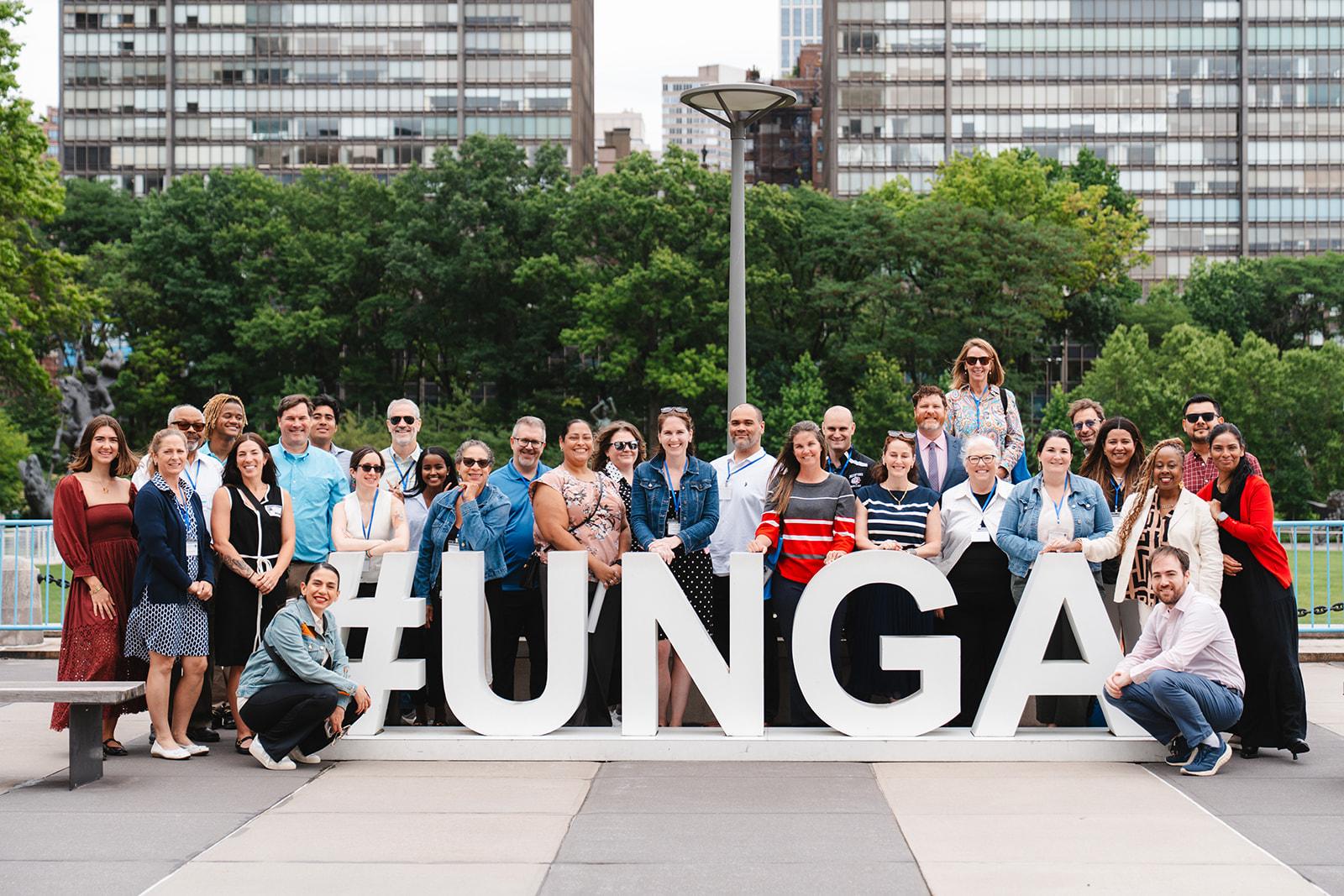
Admissions are Now Open! The FPA is proud to announce that the annual Judith L. Biggs Great Decisions Teacher Training Institute is now accepting applications from teachers across North America! If you apply today, you will have the opportunity to join a top-tier group of fellow educators for one week of intensive international affairs workshops […]

The Foreign Policy Association (FPA) is excited to introduce this initiative, designed to amplify student voices, accomplishments, and curiosities in global affairs. For over 100 years, FPA—a non-partisan, not-for-profit organization—has promoted awareness and informed debate on U.S. foreign policy and global issues. Recognizing teens’ eagerness to engage in critical discussions, we’ve tailored Great Decisions resources […]

