
We say this every year. But like the stubbornly optimistic Chicago Cubs fan (which I also happen to be), we’ll say it again: 2010 could be the year. This year we could see further change in U.S. policy toward Cuba, starting with opening travel.
The Congressional push to open up Cuba for travel by U.S. citizens was buried at the end of last year in the urgency (at the time) of the health care reform debate. The bill’s sponsors—including Representatives Bill Delahunt (Democrat) and Jeff Flake (Republican)—intend to dig it out and press forward, starting now. The problem at the moment is the Democrats’ reluctance to actually bring the bill to the floor for a vote. The votes may be there (across party lines), but the issue isn’t at the top of their agenda and is one that splits the caucus.
Unfortunately, the momentum that came from Obama’s lifting of travel restrictions for Cuban-Americans last year is now slowed, and the issue has faded from the ever-shifting public attention. Meanwhile, there is bipartisan opposition to the bill as well, and funds channel to members of both parties from opposition, pro-embargo (often Cuban-American) groups. So bipartisanship is not necessarily a relevant asset at all for the backers of this bill.
Still, the bill gains the most support when it is lime-lighted as an issue of the rights of Americans: a U.S. citizen can travel to China, but not to Cuba? The most potential lies in this tack.
And Arturo Valenzuela, the highest ranking U.S. diplomat for Latin America, conveyed a promising message in Spain last week: when asked about the coming year in U.S. relations with Cuba, he responded positively about resuming conversations on “matters of common interest,” including migration and postal service, and mentioned that the administration hopes “to reverse some of the measures taken by the previous U.S. government to permit more fluid connections between U.S. citizens and their counterparts in Cuba.”
This could mean travel, this could mean telecommunications, this could even mean cultural and academic exchange; he is being deliberately vague. But any or all of these would be a good start.
(Photo from http://www.flickr.com/photos/womenwithoutborders/)

Edited by G. John Ikenberry. Proposed Essay Topics 1) American Foreign Policy and the Future of Multilateralism Over the postwar decades, the United States played a leadership role in building multilateral regimes and institutions across a wide range of policy areas. It was a founder of the United Nations and champion of the Bretton Woods […]
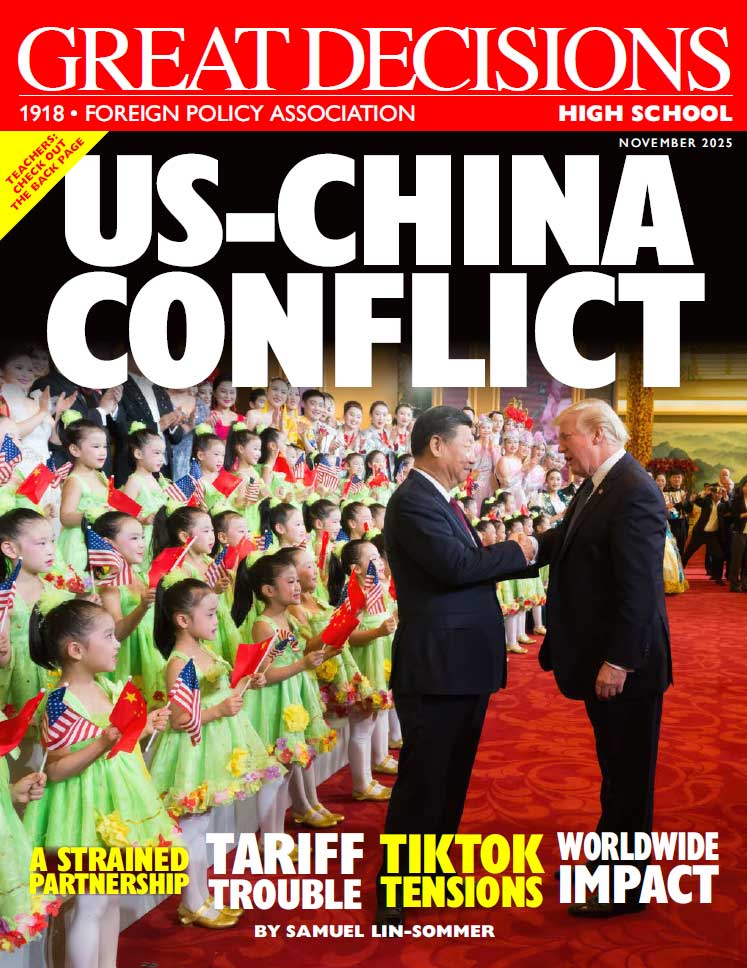
U.S.–China Relations: Competition or Cooperation? The U.S. and China stand at the center of today’s most consequential global relationship—one that shapes trade, technology, security, and the future of international leadership.Great Decisions: U.S.–China Relations, a free classroom resource from the Foreign Policy Association, helps students explore the history, tensions, and interdependence between these two nations through […]
Dive into the essential topics shaping our world with Great Decisions 2025 E-book editions! Whether you’re seeking to stay ahead in international trends or join engaging debates, Great Decisions 2025 is your passport to understanding. Find your preferred e-book format and retailer below to get started: Barnes and Noble – Read on your Nook or any compatible device.Kobo – For […]

