
The U.S. Treasury Department has made a rule change that it says will help people in Iran, Sudan, and Cuba communicate with the outside world. An amendment made this week will make it possible for American companies to acquire general licenses for exportation of personal Internet-based communications services, such as instant messaging and chat, to these three countries.
Havana did not see this as a loosening of one of the knots of the embargo, however, but as a step backward and an admission by Washington that it aims to topple the Cuban regime. The Foreign Ministry stated, “The government of the United States has said clearly that its objective is to use these services as a tool of subversion and destabilization.”
This might look like just another day of mistrust and poorly articulated objectives in the US-Cuba saga to some, yet after hearing Havana so many times blame the United States for its citizens’ connectivity problems and highly priced Internet, I admit that this reaction from the island surprised me. But looking into it a bit more, the new regulations are bound to look suspect: they only apply to Cuban individuals, not businesses or institutions, which can certainly look like an attempt to circumvent Cuban government and get to the people (in fact, that’s quite literally what it is). And when Cuba is half-convinced that all members of the opposition in Cuba are mercenaries of the U.S. government (they either believe it, or believe that the excuse is a convenient way to dismiss all of them as illegitimate), it is unlikely that Havana would embrace a new U.S. regulation that would seemingly attempt to give dissidents powers their own government does not.
So in the end, I suppose it is simply another day of mistrust and poorly articulated/executed objectives in the US-Cuba saga.
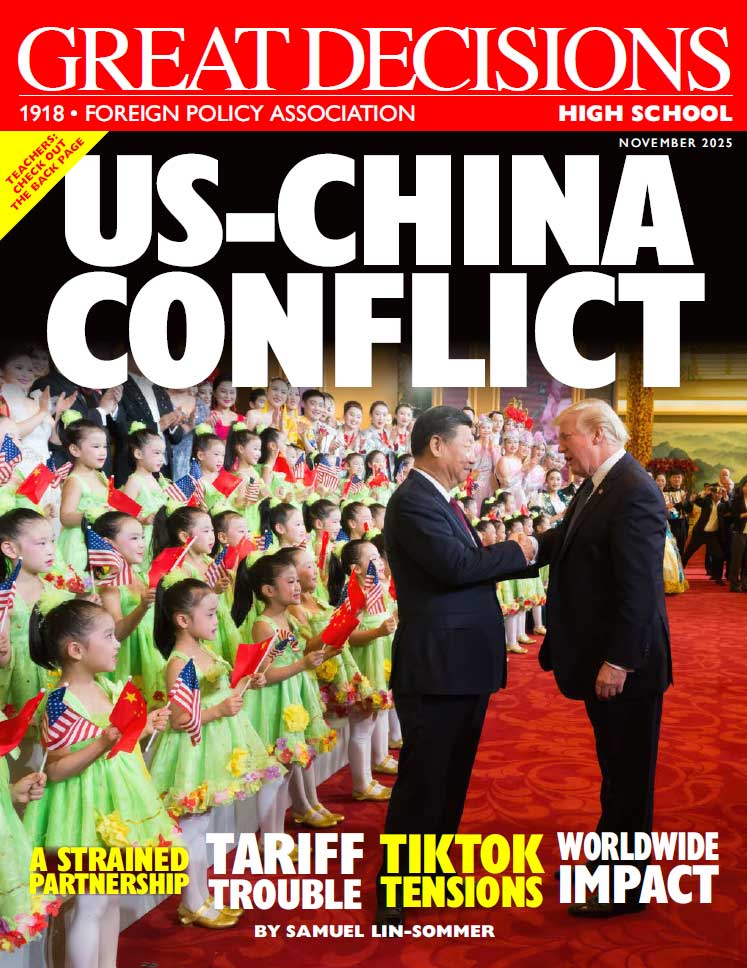
U.S.–China Relations: Competition or Cooperation? The U.S. and China stand at the center of today’s most consequential global relationship—one that shapes trade, technology, security, and the future of international leadership.Great Decisions: U.S.–China Relations, a free classroom resource from the Foreign Policy Association, helps students explore the history, tensions, and interdependence between these two nations through […]

Dive into the essential topics shaping our world with Great Decisions 2025 E-book editions! Whether you’re seeking to stay ahead in international trends or join engaging debates, Great Decisions 2025 is your passport to understanding. Find your preferred e-book format and retailer below to get started: Barnes and Noble – Read on your Nook or any compatible device.Kobo – For […]

