
A recent blog post from the Open Society Institute cites a staggering figure: Over 90% of Rio de Janeiro’s homeless are addicted to crack.
This figure is shocking, even for a city as beset by social problems as Rio. (Though reliable data on drug use and homeless populations in other major cities has proven difficult to find, particularly for the developing world, I was able to track down a few studies of homeless populations in North American cities. In Toronto, for example, crack usage rates were found to be around 50%.)
What might account for this outlier? According to the 2010 UN World Drug Report, overall crack-cocaine use was on the rise in Brazil and in the rest of South America, but, as a global survey, the report doesn’t examine deeply the ballooning rates of drug use in urban centers such as Rio. Nor do I think that income inequality alone explains the phenomena, especially since homelessness does not necessarily correlate with a rise in drug use.
Brazil has long been at the forefront of harm reductionist drug policies, which bodes well for its future combating drug abuse. And, as OSI’s Kasia Malinowska-Sempruch points out, the city is taking sensible steps towards addressing its drug problem through joint efforts with community NGOs. I’d interested in uncovering how Rio reached this point in the first place, and whether or not there are lessons which can be applied in other cities across Brazil.

Edited by G. John Ikenberry.Cover image download. Proposed Essay Topics 1) American Foreign Policy and the Future of Multilateralism Over the postwar decades, the United States played a leadership role in building multilateral regimes and institutions across a wide range of policy areas. It was a founder of the United Nations and champion of the […]
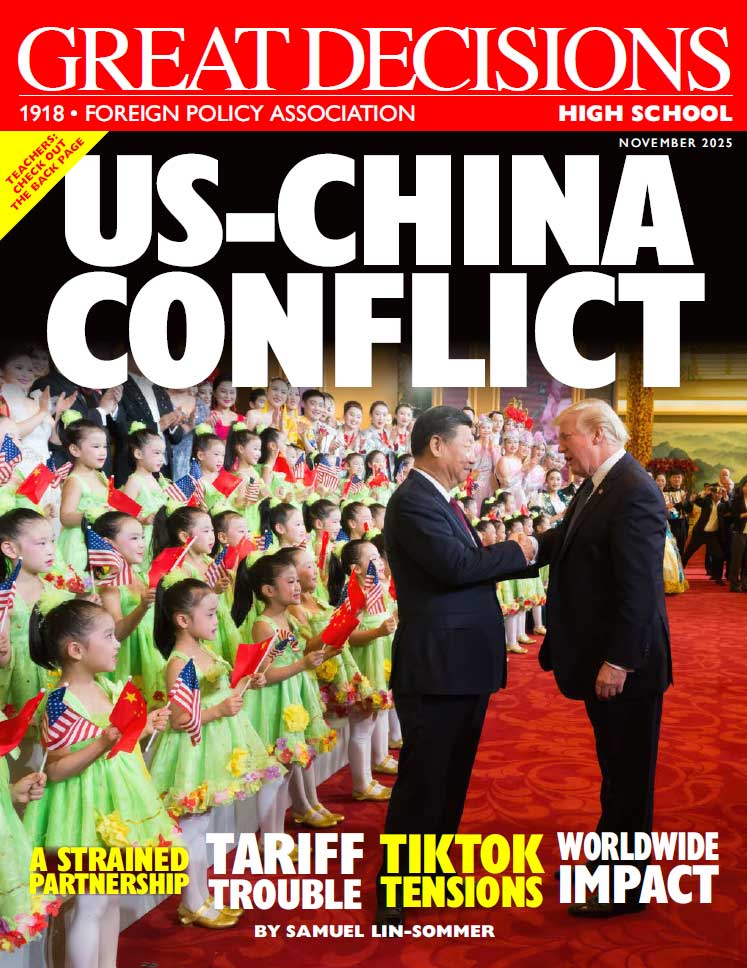
U.S.–China Relations: Competition or Cooperation? The U.S. and China stand at the center of today’s most consequential global relationship—one that shapes trade, technology, security, and the future of international leadership.Great Decisions: U.S.–China Relations, a free classroom resource from the Foreign Policy Association, helps students explore the history, tensions, and interdependence between these two nations through […]
Dive into the essential topics shaping our world with Great Decisions 2025 E-book editions! Whether you’re seeking to stay ahead in international trends or join engaging debates, Great Decisions 2025 is your passport to understanding. Find your preferred e-book format and retailer below to get started: Barnes and Noble – Read on your Nook or any compatible device.Kobo – For […]

