
The last few weeks have been an intriguing one for Latin America. With the release of a report showing an increase of 150% in weapons purchases by Latin American governments over the last 5 years, US officials being murdered in Mexico’s drug war, Lula visiting the Middle East and Medvedev confirming a trip to Argentina and Brazil, and investments from China in Argentina and Canada and Colombia finalising the last agreements to create a Trade Pact, the region is looking more like a global power broker than ever before.
The whole region has been able to make security news over the last few weeks, probing a policy response from the US government, whether the Americans wish to deal with “America’s Backyard” or not. A major international even occurred in Ciudad Juarez this past week where drug cartels had assassinated US consular officials, making US officials and the US public give some serious attention to Mexico’s drug war which has been heating up and has had more killed each month that Afghanistan and Iraq combined, with few exceptions. On top of this immediate shock to my Americans on their border, Brazilian President Lula da Silva has been making the rounds in the Middle East in a response to the new energy coming from the region towards Brazil and forcing Latin America’s future powerhouse to decide on what policy approaches it wishes to take in the Middle East. Brazil has always sought to become a mediator between the leftists and pro-US allies in the Americas, but with a Superpower label haunting its policymakers, a tour of Iran and communications with Israel might bring Brazil into the debate on the Middle East sooner than it anticipated or should ever wish to have. A lot of the push comes from its relations with the US and the advancement of Middle Eastern politics in Latin America via Venezuela. Lula spent this Wednesday visiting Ramallah and urging his support for a trade pact with both the Palestinian leaders and Israel as well. He will visit Iran in May to open a closer dialogue with Iran’s present and partially illegitimate government.
A report on the increase in weapons purchases over the last 5 years has brought attention to Venezuela, and as a result, Colombia as well. Uribe, who’s political backers and supporters won another vote of confidence from the people of Colombia this past week in Legislative elections have been solidifying a Trade Pact with Canada in an attempt to open trade ties with both its northern neighbours, and has had success with Canada during a time where the Canadian economy is seen as the poster child for developed economies and has been praised by Mr. Obama. While the relationship with Canada is very positive, it also encourages less criticism in the US Congress on Colombia if Canada is willing to support trade with Uribe’s policymakers. Uribe often accuses Venezuela of promoting a regional cold war due to Chavez’s open criticisms of Colombia and belief that the CIA and Uribe is trying to have him assassinated. Venezuela, who has lead a publicity campaign against Uribe due to the agreement by Colombia to allow US Bases in its territory has been restocking its military inventory with some of the best Russian weaponry oil money can buy. Much of this information is openly accessible as purchases of Russian and other weapons sales, showing this week’s Chinese anti-drug enforcement training aircraft on Venezuelan television. Weapons purchases are often documented, promoted and detailed in Venezuelan media, and in articles on Russian weapons exports. The president of Russia, Dmitry Medvedev will extend its relations deeper into Latin America announcing a trip to Argentina and Brazil in a few weeks. In the end, Russian oil relations and weapons exports come with payments, and Chinese investment strategies in Latin America benefit the source countries as much as the purchasing nations.
While trade has always been the driving force in Latin America due to the economic crisis in most countries in the region in the 1980s and 1990s, it seems that the moderate success in the global economic recession of many countries have literally propelled many countries into a position of influence. For the most part, Brazil has become a superpower overnight, and by measure of this blog’s attention it had started for the most part late last summer in the media and is continuing to grow optics-wise. Chilean expected economic success has been tied to its earthquake troubles which even shook the swearing in ceremony of the new President, but will keep Chile in a positive light. Economic troubles in Argentina continue, and the drug war which is gripping North America and Mexico has received little attention in the US and Canada until US citizens have been targeted themselves. Perhaps the drug gangs have awoken a sleeping giant, and perhaps that giant should wake up and have a constructive policy towards the region instead of waiting for events to dictate their policy response. In either case, security issues in Latin America seem to be taking the agenda beyond trade policy as other nations set to set their role in Latin America in concrete and oil and capital investments. While the US and Europe deal with domestic issues, Brazil appears to be picking up the flame and will do so well past the Rio Olympics.
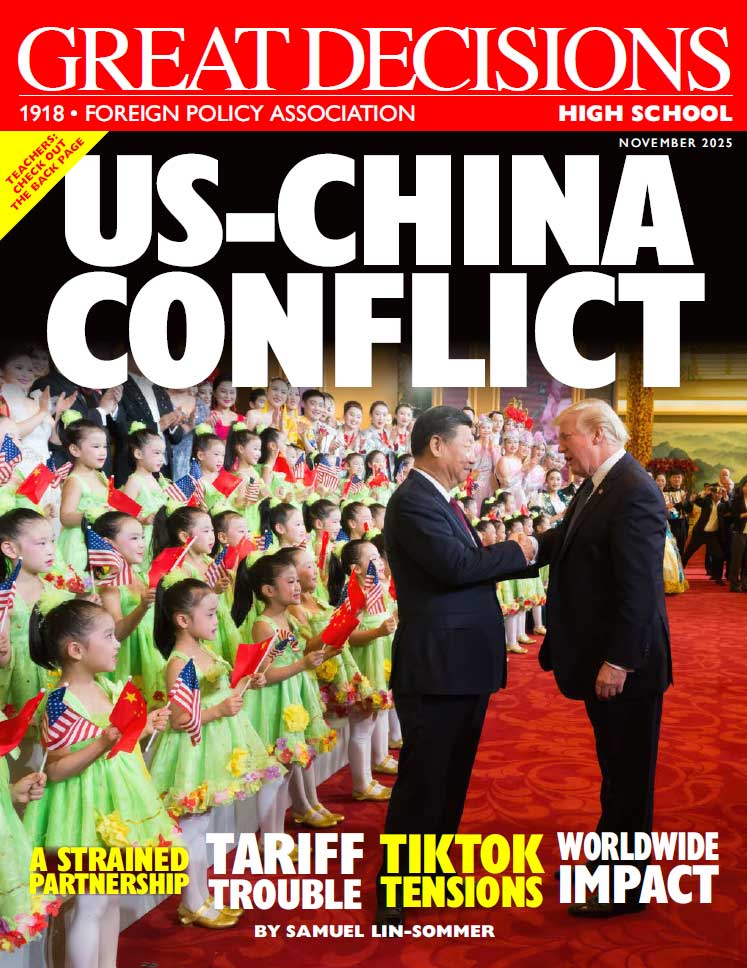
U.S.–China Relations: Competition or Cooperation? The U.S. and China stand at the center of today’s most consequential global relationship—one that shapes trade, technology, security, and the future of international leadership.Great Decisions: U.S.–China Relations, a free classroom resource from the Foreign Policy Association, helps students explore the history, tensions, and interdependence between these two nations through […]

Dive into the essential topics shaping our world with Great Decisions 2025 E-book editions! Whether you’re seeking to stay ahead in international trends or join engaging debates, Great Decisions 2025 is your passport to understanding. Find your preferred e-book format and retailer below to get started: Barnes and Noble – Read on your Nook or any compatible device.Kobo – For […]

