
Following the botched Christmas Day bombing attempt on a Northwest Airlines flight into Detroit, the U.S. Transportation Security Administration announced extra screening measures on Sunday. The new security measures call for inspecting baggage and patting down U.S.-bound passengers from four countries that the U.S. government considers state sponsors of terrorism, and 10 other “countries of interest.” As we’ve mentioned before, Cuba is one of those countries the United States considers a sponsor of terrorism, and it did not fail to make this list. (All of the other 13 countries, by the way, are Muslim-majority nations).
Naturally, this angered Havana, which for years has argued against its State Department designation as a sponsor of terrorism. Cuba’s Communist Party newspaper, Granma, said the US measures were tantamount to “antiterrorist paranoia.” The statement released by the Cuban government called the new measures against passengers flying to and from Cuba a “politically motivated” ploy. “We categorically reject this new hostile action by the United States government,” it said. A note protesting the designation was delivered to Jonathan Farrar, head of the U.S. Interests Section in Havana, and to the State Department in Washington.
The State Department says that Cuba gives safe haven to terrorists, including members of the Basque separatist group ETA, leftist Colombian rebels the National Liberation Army (ELN) and Revolutionary Armed Forces of Colombia (FARC). But Eugene Robinson of the Washington Post is likely closer to the truth when he says:
“Cuba is not a failed state where swaths of territory lie beyond government control; rather, it is one of the most tightly locked-down societies in the world, a place where the idea of private citizens getting their hands on plastic explosives, or terrorist weapons of any kind, is simply laughable.”
National security of the type Washington seeks is important, but this particular move unfortunately serves to deepen what appears to be a growing rift in relations after a brief acercamiento between the United States and Cuba. Headlines today read, “Obama’s honeymoon [with Cuba] ends.”
There’s still potential, of course, for further changes in the bilateral relationship. But this issue, that of the detained U.S. contractor in Cuba, and the increasingly negative words coming from Havana (from Ricardo Alarcón: “As things appear now, there will be no big change in the relationship in the near future”; from Raúl: accusations of Obama administration “undercover subversion” against Cuba; from Fidel: Obama’s “friendly smile and African-American face” mask his sinister intentions to control Latin America) will not make it any easier.
(AFP photo of Jonathan Farrar)
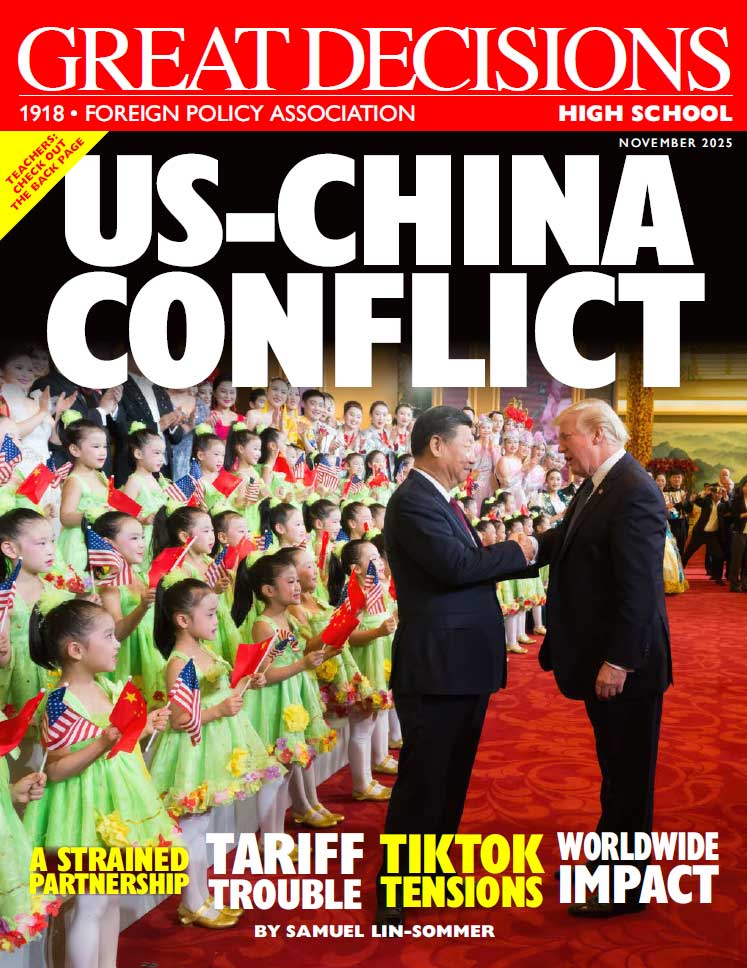
U.S.–China Relations: Competition or Cooperation? The U.S. and China stand at the center of today’s most consequential global relationship—one that shapes trade, technology, security, and the future of international leadership.Great Decisions: U.S.–China Relations, a free classroom resource from the Foreign Policy Association, helps students explore the history, tensions, and interdependence between these two nations through […]

Dive into the essential topics shaping our world with Great Decisions 2025 E-book editions! Whether you’re seeking to stay ahead in international trends or join engaging debates, Great Decisions 2025 is your passport to understanding. Find your preferred e-book format and retailer below to get started: Barnes and Noble – Read on your Nook or any compatible device.Kobo – For […]

