
Earlier this week the anthropologist and historian Lilia Schwarcz gave her impressions on contemporary Brazil in an interview for the New York Review of Books blog. As part of her conversation with Roger Darton, Schwarcz points out that, with 130 recognized gradations of color, the issue of race is far more complex in Brazil than in most other countries, including the US.
Like the US, Brazil has been forced to grapple with the legacy of slavery and hundreds of years of racial inequality. Even though Brazil never codified racial discrimination with Jim Crow-style laws, the economic disparity between the races run deep in Brazil, as it does in the US. Today black Brazilians make just 58 cents for every $1 earned by a white Brazilian.
In June Brazil passed the Racial Equality Law to help tackle the gap between whites and blacks by rewarding businesses with a workforce that is more than 20% black. Under the law, an afro-Brazilian university will be established in Ceara, while all elementary and middle schools will have to teach black Brazilian and African history. Some of the bill’s more ambitious provisions, most notably university quotas, were stripped from the bill by senators opposing policies that veer too close to affirmative action.
Reception to the law has been mixed. While applauding the focus on education, civil rights activists have criticized the bill for neglecting to address the most pressing social issues facing blacks, such as land rights and police brutality. The response to the law further underscores the complex relationship in Brazil between race and politics that scholars like Lilia Schwarcz have long been writing about.

Edited by G. John Ikenberry.Cover image download. Proposed Essay Topics 1) American Foreign Policy and the Future of Multilateralism Over the postwar decades, the United States played a leadership role in building multilateral regimes and institutions across a wide range of policy areas. It was a founder of the United Nations and champion of the […]
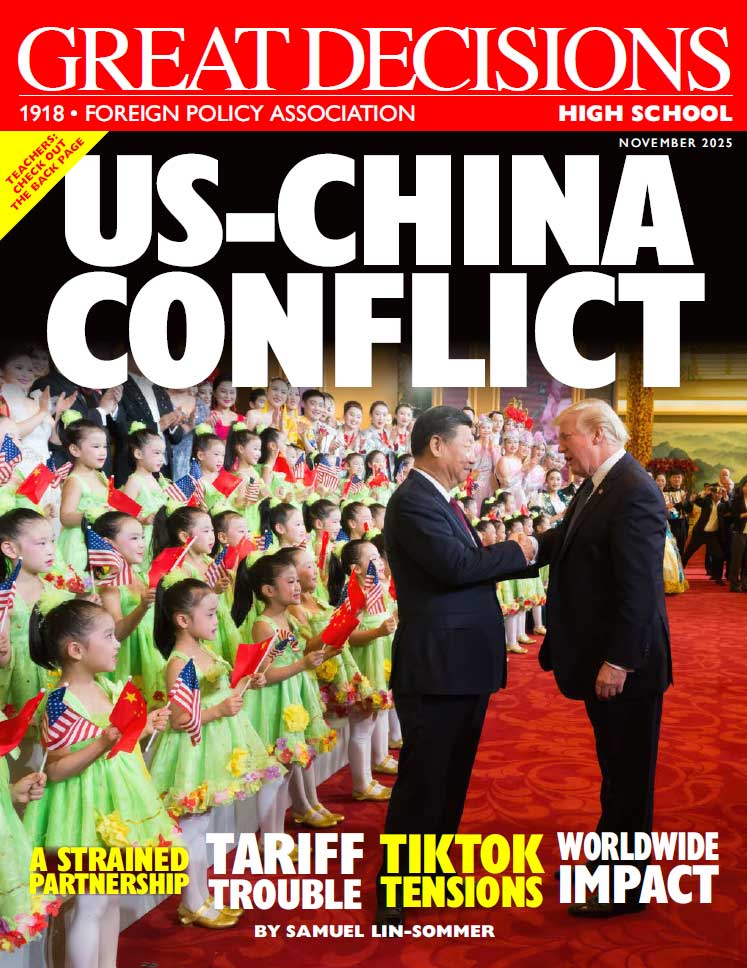
U.S.–China Relations: Competition or Cooperation? The U.S. and China stand at the center of today’s most consequential global relationship—one that shapes trade, technology, security, and the future of international leadership.Great Decisions: U.S.–China Relations, a free classroom resource from the Foreign Policy Association, helps students explore the history, tensions, and interdependence between these two nations through […]
Dive into the essential topics shaping our world with Great Decisions 2025 E-book editions! Whether you’re seeking to stay ahead in international trends or join engaging debates, Great Decisions 2025 is your passport to understanding. Find your preferred e-book format and retailer below to get started: Barnes and Noble – Read on your Nook or any compatible device.Kobo – For […]

