
According to a press release from the U.S. House of Representatives Committee on Agriculture, Chairman Collin C. Peterson of Minnesota introduced the bill H.R. 4645 to the House today with bipartisan co-sponsorship from 30 other members of Congress. The bill, which is also known as the Travel Restriction Reform and Export Enhancement Act, would not only facilitate U.S. agricultural exports to Cuba, but would (as the bill’s name implies) apparently allow for U.S. citizens to travel to Cuba.
On agricultural export changes, the press release says:
“The Travel Restriction Reform and Export Enhancement Act would eliminate both the need to go through banks in other countries to conduct agricultural trades and the accompanying fees those banks charge.
“The bill would also require agricultural exports to Cuba to meet the same payment requirements as exports to other countries, which means payment would be required when the title of the shipment changes hands, not in advance.”
As Peterson points out, facilitating this trade would benefit the U.S. economy and the Cuban people—two goals that the U.S. government claims to care deeply about. Republican Representative Jerry Moran (Kansas), one of the bill’s co-sponsors, explained the practical reasoning behind the bill’s proposed changes to current legislation: “Current U.S. trade policies hurt American farmers and ranchers by making it more expensive for Cuba to purchase agriculture products from the United States. Instead, Cuba is buying its food from other countries less friendly to the U.S. By standardizing our trade policies, we will increase export sales and support thousands of American jobs. I have long fought for common sense reforms to our trade policy with Cuba, and I am glad to partner with Chairman Peterson on this important legislation.”
Naturally, this being the Committee on Agriculture, the travel aspect is an afterthought in the press release—just one sentence: “Finally, the bill would allow U.S. citizens to travel to Cuba, reducing the bureaucratic red tape currently required for individuals to travel to Cuba to facilitate new agriculture sales.” And the text of the bill is not available yet from the Library of Congress in order to peruse the particulars (it should be available in the next 24-48 hours on the Library of Congress’ THOMAS website, here). But it seems that lowering travel restrictions, an important initiative, is a provision that is indeed folded inside the agricultural trade bill, which could be good news for getting it passed.

Edited by G. John Ikenberry. Proposed Essay Topics 1) American Foreign Policy and the Future of Multilateralism Over the postwar decades, the United States played a leadership role in building multilateral regimes and institutions across a wide range of policy areas. It was a founder of the United Nations and champion of the Bretton Woods […]
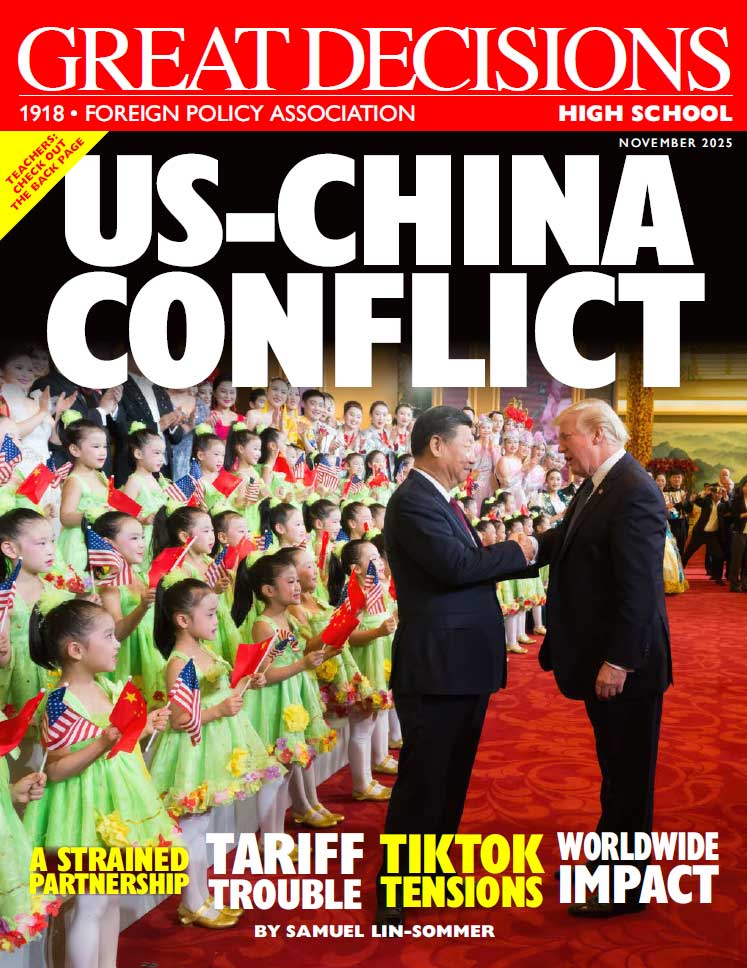
U.S.–China Relations: Competition or Cooperation? The U.S. and China stand at the center of today’s most consequential global relationship—one that shapes trade, technology, security, and the future of international leadership.Great Decisions: U.S.–China Relations, a free classroom resource from the Foreign Policy Association, helps students explore the history, tensions, and interdependence between these two nations through […]
Dive into the essential topics shaping our world with Great Decisions 2025 E-book editions! Whether you’re seeking to stay ahead in international trends or join engaging debates, Great Decisions 2025 is your passport to understanding. Find your preferred e-book format and retailer below to get started: Barnes and Noble – Read on your Nook or any compatible device.Kobo – For […]

