
The press has recently alighted upon the subject of campaign funding: its origins and its direct effect on Congressional votes with respect to Cuba policy. A report released by the Washington, DC-based group called Public Campaign shows fairly straightforward timelines: lawmakers vote for easing restrictions on Cuba; those same lawmakers receive donations from a pro-embargo political action committee (PAC); the next vote sees them voting in favor of the embargo. And over the last seven years, groups supporting the embargo have made over $10.77 million in congressional campaign contributions.
Of course, as the embargo-backers in question are arguing, there are many groups that channel money to politicians who support their views. They’re being singled out unfairly.
For me, that does not clear the air. The connection between politics and money is problematic in itself (and subject for someone else’s blog, perhaps), but in this case particularly so: Cuba policy is now essentially the policy of a minority in the United States, and the fact that money is an influential part of what keeps it going is disturbing.
Public Campaign cites 18 lawmakers that changed sides on the issue following a donation from the pro-embargo PAC, including, for example, Republican Representative Sam Graves:
Graves cast seven votes between 2003 and 2005 to ease the trade embargo and other sanctions on Cuba.
Then on three subsequent Cuban trade votes, he withdrew his backing and opposed lifting the sanctions, according to the report.
Since 2004, the five-term lawmaker from Tarkio and a member of the House Agriculture Committee, has received $8,000 from the U.S.-Cuba Democracy Political Action Committee, campaign records show.
The entire Kansas City article is here. Also see the Associated Press‘ take on the issue, that of the AFP, and see the Public Campaign report itself here.

Edited by G. John Ikenberry.Cover image download. Proposed Essay Topics 1) American Foreign Policy and the Future of Multilateralism Over the postwar decades, the United States played a leadership role in building multilateral regimes and institutions across a wide range of policy areas. It was a founder of the United Nations and champion of the […]
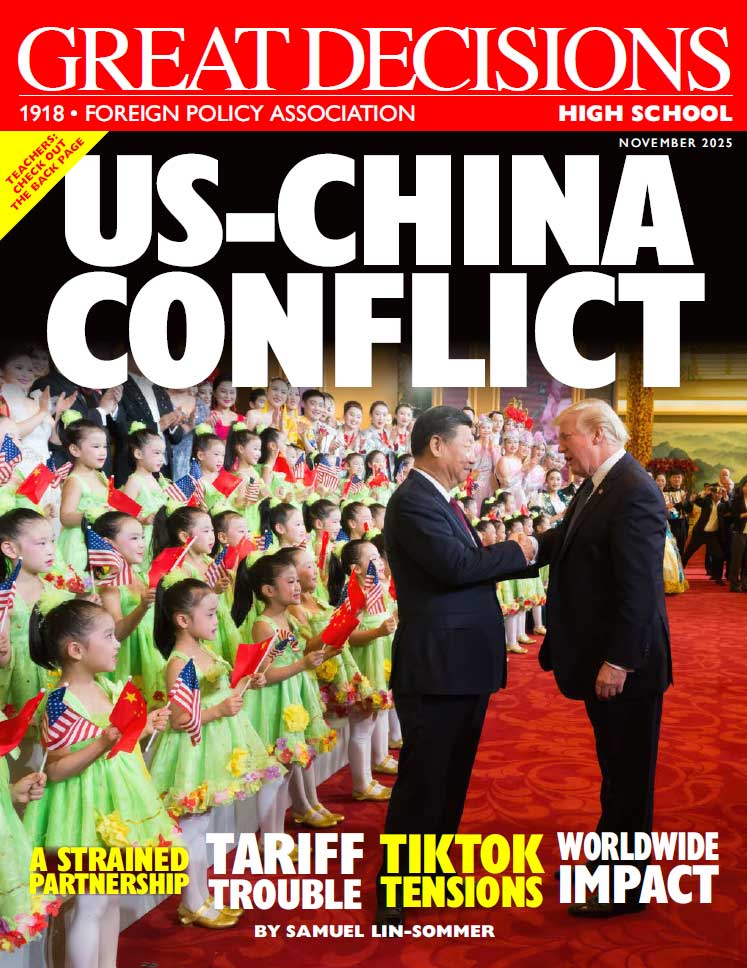
U.S.–China Relations: Competition or Cooperation? The U.S. and China stand at the center of today’s most consequential global relationship—one that shapes trade, technology, security, and the future of international leadership.Great Decisions: U.S.–China Relations, a free classroom resource from the Foreign Policy Association, helps students explore the history, tensions, and interdependence between these two nations through […]
Dive into the essential topics shaping our world with Great Decisions 2025 E-book editions! Whether you’re seeking to stay ahead in international trends or join engaging debates, Great Decisions 2025 is your passport to understanding. Find your preferred e-book format and retailer below to get started: Barnes and Noble – Read on your Nook or any compatible device.Kobo – For […]

