
The Universal Declaration of Human Rights was adopted by the United Nations General Assembly on December 10, 1948: annually on this date, countries around the globe honor it, the first global iteration of human rights.
In Havana today, two small peaceful marches of Cubans commemorated the date, only to have their ranks broken up by an angry mob calling them “mercenaries” and screaming insults. The reasoning for such a reaction might go something like this: if one is protesting, then (s)he is asking for something (s)he has not been allowed to have, which means (s)he is criticizing the government and therefore might be a foreign mercenary, but at any rate is dangerous to a unified and strong Cuba, always the ideal.
No one was hurt, but the lesson learned is a hard one to swallow: a mentality of “you’re either for us or against us” often reigns in Cuba, to the detriment of such peaceful non-conformists.
The reasons for such a mindset are many—for one, a powerful neighbor that for fifty years has tried to slowly strangle it makes trust hard to come by—but the consequences are more than unfortunate. And the negative responses to dissidents, so often attributed to the Cuban government, sometimes come from the Cuban populace itself (as seemed to be the case today). The Associated Press reports that pro-government “acts of repudiation” against dissidents happen a few times a year, and state security often gives a ride home to opposition activists to guard against violence.
Still, almost at the same time today, Pope Benedict XVI said that there are growing signs of religious freedom in Cuba. In 1959, the year of Fidel Castro’s revolution, the government expelled priests from the country and shut down religious schools, but since a papal visit in 1998, relations between the Church and the government have improved. Indeed, Benedict today cited encouraging signs of religious freedom, including the celebration of Mass in some prisons, a new tolerance of religious processions, the refurbishment of some church buildings, and the extension of social security to the clergy.

Edited by G. John Ikenberry.Cover image download. Proposed Essay Topics 1) American Foreign Policy and the Future of Multilateralism Over the postwar decades, the United States played a leadership role in building multilateral regimes and institutions across a wide range of policy areas. It was a founder of the United Nations and champion of the […]
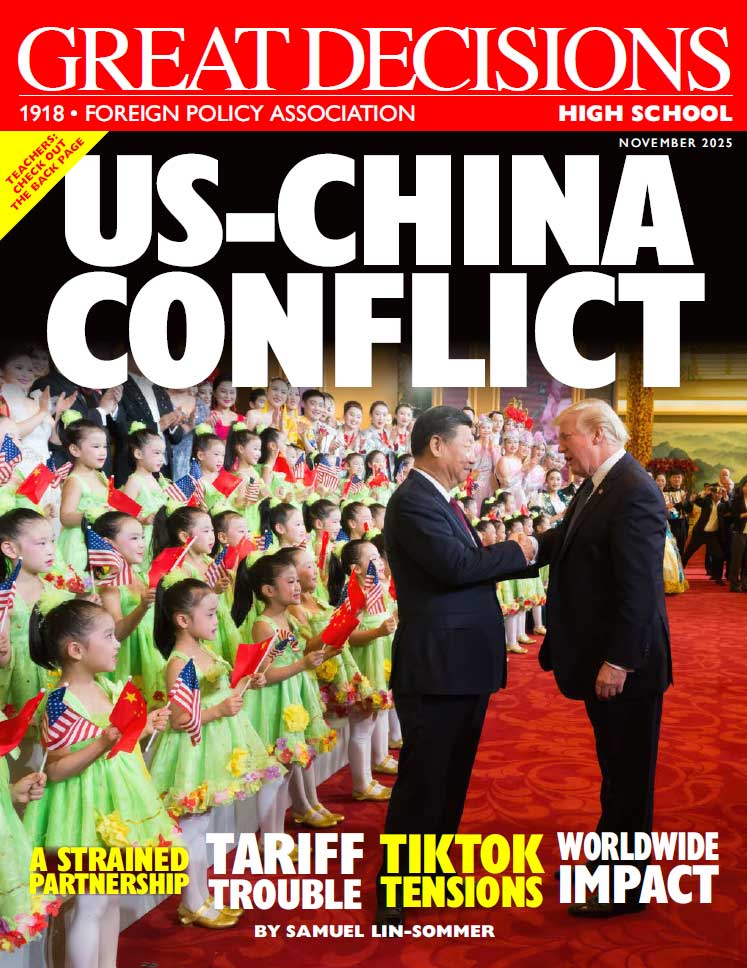
U.S.–China Relations: Competition or Cooperation? The U.S. and China stand at the center of today’s most consequential global relationship—one that shapes trade, technology, security, and the future of international leadership.Great Decisions: U.S.–China Relations, a free classroom resource from the Foreign Policy Association, helps students explore the history, tensions, and interdependence between these two nations through […]
Dive into the essential topics shaping our world with Great Decisions 2025 E-book editions! Whether you’re seeking to stay ahead in international trends or join engaging debates, Great Decisions 2025 is your passport to understanding. Find your preferred e-book format and retailer below to get started: Barnes and Noble – Read on your Nook or any compatible device.Kobo – For […]

