
Effective Networking
If you are like most job seekers these days, you have likely spent hours and hours searching the internet for organizations with job openings that match your skills and experience. If you’re lucky, those searches eventually uncover a job posting perfect for you. You then spend even more time assembling an application and sending it in. You sit back and wait, and wait and wait for a response. The fact is that if you found and applied for this job, there are probably hundreds of other candidates who did the same. You need to find any edge possible on the competition.
While there are several things you can do to rise above the other candidates via your actual application, there is one thing you can do before you apply to help make sure your resume is the one that gets the most attention: network with people in the industry. Making connections with as many people as possible during your job search can: 1) help you identify the organizations that operate in a way that can best utilize your skills, 2) introduce you to brand new segments of the development world that you were previously unaware of (there are, after all, thousands of development organizations), and 3) help you make connections with staffers at the organizations that you are most passionate about. For now, we’ll focus on this last point and what to do and not do when you have made such a connection.
Where and how to start?
Most people are not natural networkers. It takes a lot of effort and some courage to start this long and oftentimes uncomfortable process. The good news is that once you get a couple good leads, they tend to multiply quickly. An added benefit in the world of international development is that you will be eventually be asking people who are prone to being generous with their time and skill to help you out.
Moreover, unlike even five years ago, it is incredibly easy these days to network. Everyone knows the relevant sites, but not everyone realizes the best way to use them.
First, you need to build a network. After you create an account on a site like LinkedIn, get to work building your own network. This does not mean scouring organizations you like and asking staffers who you do not know to accept your invitation to connect. Most people you do not know will not want to open up their “address book” to you. You can, however, easily build a network by connecting with friends, current and former classmates, family friends, current and past colleagues, and teachers and professors first and then seeing where those primary contacts take you. Start with the people who know and like you and move to their networks via a personal connection.
Second, join relevant industry and topical groups on these sites. Many of these boards feature job opportunities that do not make it to the big public job boards or to an organization’s website (or at least not until later). These are often the jobs that most urgently need to be filled as well.
Third, actively use the two methods above. Having 500 contacts is useless unless you actually try to reach out to people to set up informational calls or meetings. Start with the people who know you best and who would be glad to do some legwork for you.
You made a connection, now what do you do?
You created a network of hundreds of contacts, you scoured the job conversations, asked your friends to connect you and now have an introduction to a person at your #1 target organization. How you approach this potential connection could have a meaningful impact on whether you get a job at that company. If you are tempted to just shoot off a casual text to ask when they can talk to you, be sure you understand who the audience is. This contact very well may be asked to provide a summary of their interactions with you and a recommendation on whether you should be offered an interview or possibly even a job, so make sure you start thinking in interview mode.
What do I mean by “interview mode”? That means you should treat this opportunity as if you are starting the interview process. That means several things.
Whatever strategy you employ here, rest assured that it will likely be some of the most valuable and impactful time you can spend on the job hunt front. Good luck!

Edited by G. John Ikenberry.Cover image download. Proposed Essay Topics 1) American Foreign Policy and the Future of Multilateralism Over the postwar decades, the United States played a leadership role in building multilateral regimes and institutions across a wide range of policy areas. It was a founder of the United Nations and champion of the […]
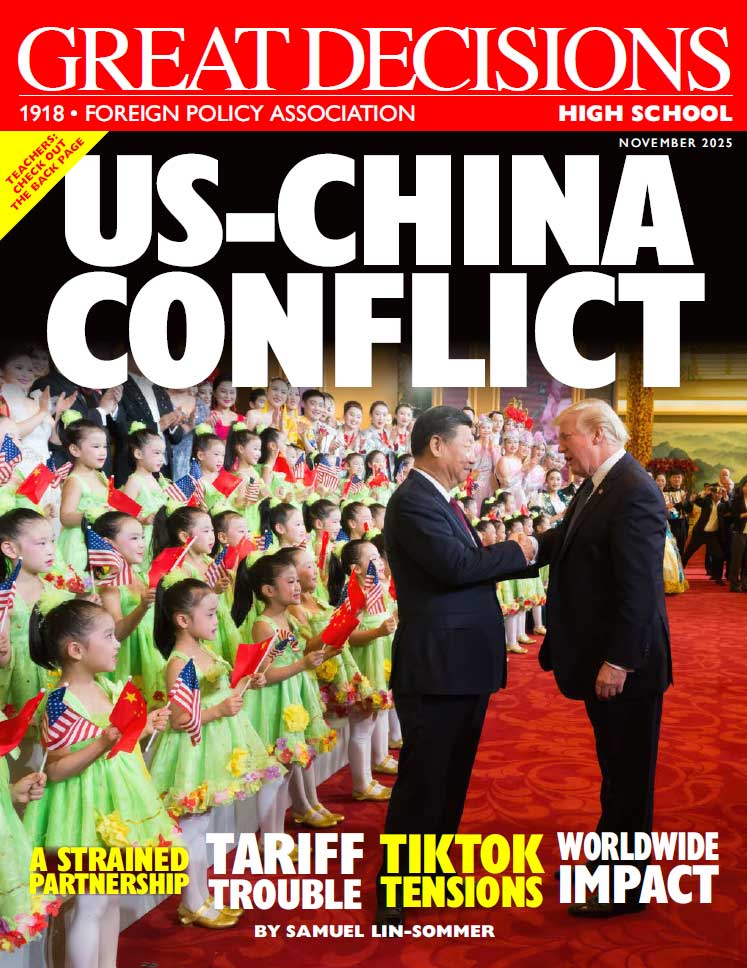
U.S.–China Relations: Competition or Cooperation? The U.S. and China stand at the center of today’s most consequential global relationship—one that shapes trade, technology, security, and the future of international leadership.Great Decisions: U.S.–China Relations, a free classroom resource from the Foreign Policy Association, helps students explore the history, tensions, and interdependence between these two nations through […]
Dive into the essential topics shaping our world with Great Decisions 2025 E-book editions! Whether you’re seeking to stay ahead in international trends or join engaging debates, Great Decisions 2025 is your passport to understanding. Find your preferred e-book format and retailer below to get started: Barnes and Noble – Read on your Nook or any compatible device.Kobo – For […]

