
Just over a year ago the emergence of H1N1 stoked global hysteria; today it is all but forgotten. With the benefit of hindsight, I wonder, What lessons can be learned from the public health responses around the region? In considering this question I have focused on the region’s bookends, Mexico and Argentina.
Mexico responded swiftly to the H1N1 outbreak. The government closed schools, shut down Mexico City for five days, and sought informed guidance on managing a public health crisis. The costs of this strategy shocked the economy; the stock market and peso dropped, then rebounded when the situation stabilized. A quarantine sacrificed $90 million a day in revenue.
While Mexico’s public health response cost the economy some $5 billion, Dr. Margaret Chan, Director-General of the WHO, concluded, “it helped slow the initial spread of the virus and gave other nations more time to prepare.” CBS News stated that Mexico “deserves the world’s thanks.” Initially scorned, Mexico is now praised for its aggressive countermeasures.
As winter entered the Southern Hemisphere, the arrival of flu season in June was met with much anxiety. H1N1 first showed up in Chile, but it was Argentina where the effect was most acute. Argentina has the world’s highest death rate from H1N1—2.4% of those who contracted H1N1 died there. (By comparison, Chile’s mortality rate is 0.2%.) Consequently, Alejandro Macias, an infectious disease specialist, has deemed Argentina “the epicenter of the world” in the fight against H1N1. By summer’s end, Argentina had the second-highest number of H1n1 fatalities, after the United States.
It seems unlikely that H1N1 was more virulent in Argentina than elsewhere. Public policies seem to account for the disparities.

Edited by G. John Ikenberry.Cover image download. Proposed Essay Topics 1) American Foreign Policy and the Future of Multilateralism Over the postwar decades, the United States played a leadership role in building multilateral regimes and institutions across a wide range of policy areas. It was a founder of the United Nations and champion of the […]
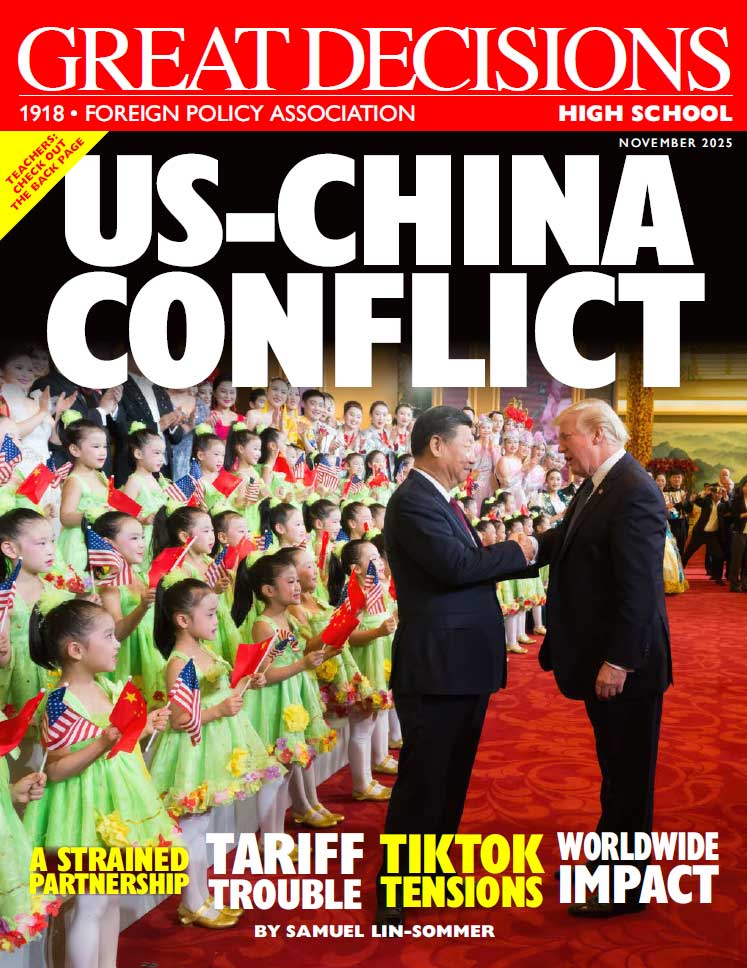
U.S.–China Relations: Competition or Cooperation? The U.S. and China stand at the center of today’s most consequential global relationship—one that shapes trade, technology, security, and the future of international leadership.Great Decisions: U.S.–China Relations, a free classroom resource from the Foreign Policy Association, helps students explore the history, tensions, and interdependence between these two nations through […]
Dive into the essential topics shaping our world with Great Decisions 2025 E-book editions! Whether you’re seeking to stay ahead in international trends or join engaging debates, Great Decisions 2025 is your passport to understanding. Find your preferred e-book format and retailer below to get started: Barnes and Noble – Read on your Nook or any compatible device.Kobo – For […]

