
The cover shown to the right is only the beginning of the problem that Miami-Dade County residents identified with the book Vamos a Cuba. The school board in that county decided to remove the book from schools because it contained omissions about life in Cuba under Castro. Happy Cuban children, children who “eat, work, and go to school like you do,” as the book told American kids, were decided to be a misrepresentation of the truth.
When the issue went to court, a judge initially ruled the move unconstitutional, but when they appealed, the 11th U.S. Circuit of Appeals decided that Vamos a Cuba was, indeed, such an inaccurate picture of life in Cuba that the school board could legally remove it from the shelves. And when the U.S. Supreme Court declined to take up the case on Monday, it thereby upheld this ruling.
First of all, why isn’t the answer providing more books on Cuba to children, with varied perspectives? The defense argues that Vamos a Cuba does not present one possible perspective, it presents factually inaccurate statements that would give children the wrong idea entirely about life on the island.
OK, maybe.
But then what about teaching children the value of accepting and connecting with people of all nations and cultures? This book is part of a series of 24 books introducing young readers to different countries. The point is that people everywhere have fundamental similarities: failing to mention Fidel Castro is an unrelated issue. Were the book a political statement (instead of a book teaching kids tolerance and the value of exploration and connecting with people of all origins), perhaps Miami-Dade would have a better basis for getting upset.

Edited by G. John Ikenberry.Cover image download. Proposed Essay Topics 1) American Foreign Policy and the Future of Multilateralism Over the postwar decades, the United States played a leadership role in building multilateral regimes and institutions across a wide range of policy areas. It was a founder of the United Nations and champion of the […]
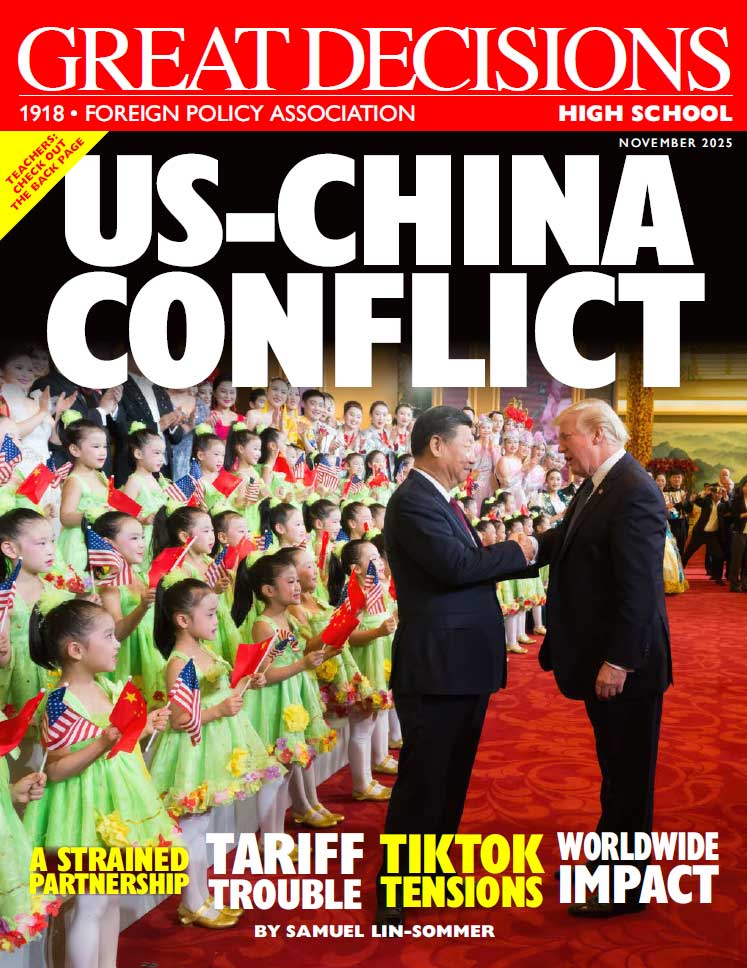
U.S.–China Relations: Competition or Cooperation? The U.S. and China stand at the center of today’s most consequential global relationship—one that shapes trade, technology, security, and the future of international leadership.Great Decisions: U.S.–China Relations, a free classroom resource from the Foreign Policy Association, helps students explore the history, tensions, and interdependence between these two nations through […]
Dive into the essential topics shaping our world with Great Decisions 2025 E-book editions! Whether you’re seeking to stay ahead in international trends or join engaging debates, Great Decisions 2025 is your passport to understanding. Find your preferred e-book format and retailer below to get started: Barnes and Noble – Read on your Nook or any compatible device.Kobo – For […]

