
Today, Cuban and U.S. officials met in Havana to discuss the re-establishment of direct mail service, which has been suspended since 1963 (one year after the imposition of the embargo). It was the first State Department trip to Cuba since 2002. Representatives from the U.S. Postal Service also joined the meetings. Issues related to mail service logistics—how the mail would be transported, methods of payment, postal security—were the only topics discussed.
Currently, letters can be sent from the United States to Cuba, but they take weeks to arrive, as they must first pass through a third country.
Information coming from the meetings thus far has been light: both sides appear to be pleased with the simple developments. And after the President’s announcement Monday that the embargo would be extended, it is heartening that these discussions (only three days later) were not stalled. After all, the United States has offered in previous years (in 1999, 2000, 2002 and 2008) to restart mail service, and Cuba’s acceptance only this year is probably because (1) Raúl now leads the country, not Fidel, and more importantly because: (2) steps were taken over the last several months that served to increase the very low levels of trust between the two nations. Signing paperwork that renews the embargo was almost certainly a step backward in that sense, but fortunately did not serve to impede these important discussions aimed at making people-to-people contact easier.
Dan Erikson of the Inter-American Dialogue in Washington believes that these discussions are a barometer for the future of U.S.-Cuban relations, and I appreciate his point. As he puts it, “This is a test of whether the United States and Cuba can deal with each other at all. If the two sides can’t deliver the mail, then all bets are off in terms of improving other aspects of the relationship.”

Edited by G. John Ikenberry.Cover image download. Proposed Essay Topics 1) American Foreign Policy and the Future of Multilateralism Over the postwar decades, the United States played a leadership role in building multilateral regimes and institutions across a wide range of policy areas. It was a founder of the United Nations and champion of the […]
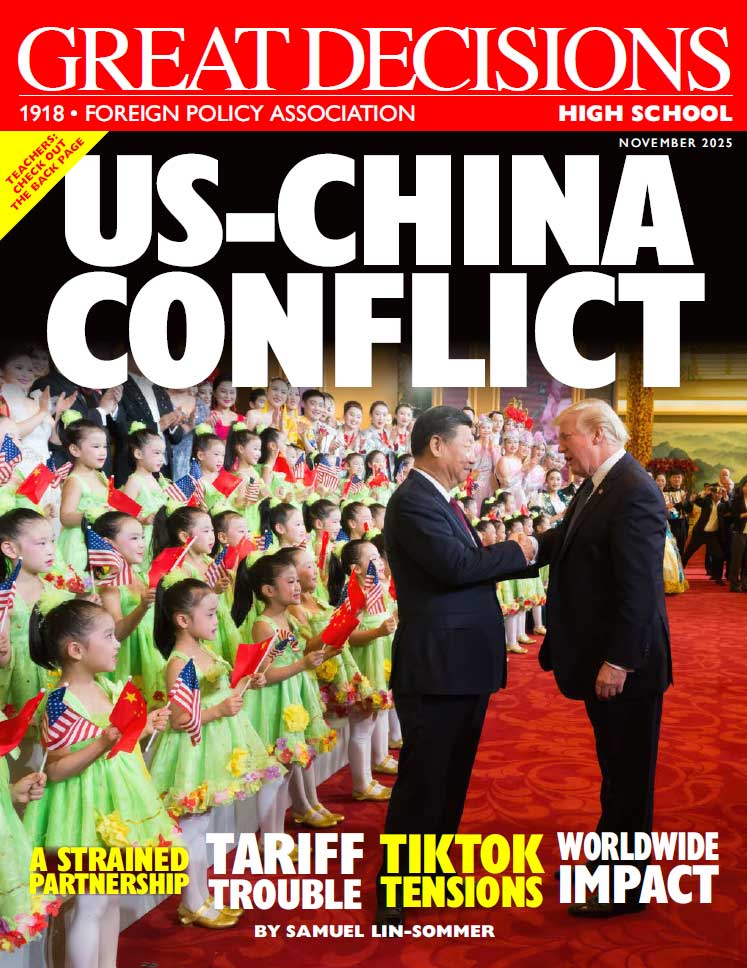
U.S.–China Relations: Competition or Cooperation? The U.S. and China stand at the center of today’s most consequential global relationship—one that shapes trade, technology, security, and the future of international leadership.Great Decisions: U.S.–China Relations, a free classroom resource from the Foreign Policy Association, helps students explore the history, tensions, and interdependence between these two nations through […]
Dive into the essential topics shaping our world with Great Decisions 2025 E-book editions! Whether you’re seeking to stay ahead in international trends or join engaging debates, Great Decisions 2025 is your passport to understanding. Find your preferred e-book format and retailer below to get started: Barnes and Noble – Read on your Nook or any compatible device.Kobo – For […]

