
The jailing of the so-called “Cuban Five” is considered by Cuba to be one of the most egregious offenses committed by the United States against their nation. The five men accused by the United States of being Cuban spies (and then sentenced and jailed) are heroes in Cuba, where supporters demand their release, saying that these men were only ever trying to prevent terrorist attacks by Cuban exile extremists.
The United States and U.S. prosecutors say, on the other hand, that the five were part of a Cuban espionage ring that had spied on the Cuban exile community in Florida and sought to penetrate U.S. military facilities there. They claim that the sentences these five received—which range from 15 years to life in prison—are justified.
Whether or not they received a fair trial in Miami, are such harsh sentences justified for plans, many of which were never carried out?
The verdict seems to be moving in the direction of “no,” as U.S. judges have recently reduced the sentences on several of the Cuban Five. Yesterday a judge cut the sentence of Ramon Labanino, also known as Luis Medina, from a life term to 30 years, and that of Fernando Gonzalez, also known as Ruben Campa, from 19 years to 17 years and nine months. And in October, Antonio Guerrero had his sentence reduced from life to 22 years.
Cuba, while acknowledging the move as a victory, has also said that it is not yet “cause for satisfaction.”

Edited by G. John Ikenberry.Cover image download. Proposed Essay Topics 1) American Foreign Policy and the Future of Multilateralism Over the postwar decades, the United States played a leadership role in building multilateral regimes and institutions across a wide range of policy areas. It was a founder of the United Nations and champion of the […]
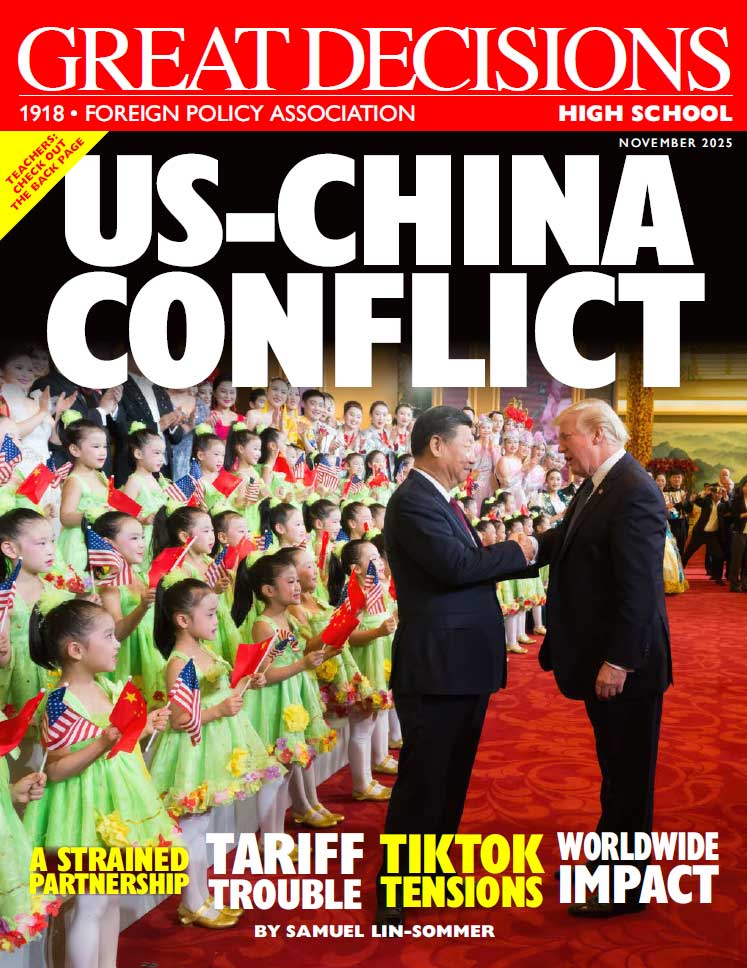
U.S.–China Relations: Competition or Cooperation? The U.S. and China stand at the center of today’s most consequential global relationship—one that shapes trade, technology, security, and the future of international leadership.Great Decisions: U.S.–China Relations, a free classroom resource from the Foreign Policy Association, helps students explore the history, tensions, and interdependence between these two nations through […]
Dive into the essential topics shaping our world with Great Decisions 2025 E-book editions! Whether you’re seeking to stay ahead in international trends or join engaging debates, Great Decisions 2025 is your passport to understanding. Find your preferred e-book format and retailer below to get started: Barnes and Noble – Read on your Nook or any compatible device.Kobo – For […]

