
Brazil is set to institute wide-ranging tariffs against the United States in 28 days. Dry milk products, cars, corn, wheat, boats, patents—over 100 goods in all—will be included. Last year Brazil argued before the WTO that US cotton subsidies to the tune of $3 billion were “archaic” and constituted unfair protection; the WTO agreed, authorizing Brazil to levy retaliatory sanctions against American goods. Not accidentally, American cotton will be slapped with a 100% tariff.
Often in the past the WTO, or its predecessor the GATT, would be on the verge of authorizing tariffs when the aggrieved party withdrew their claims under pressure from the United States. In general, countries with significant exposure to the US market have backed away from legitimate claims because the sentence—retaliation against the US—is worse than the crime. But if an aggrieved nation decides to go ahead and press its case it can inflict serious damage because WTO law authorizes retaliation across industries. Hence, Brazil’s move to spread the authorized tariffs across a slew of industries to have maximum effect.
If the tariffs are implemented they will be “highly damaging to US business interests,” says Steven Bipes of the US-Brazil Business Council. Things may go even further. Brazil has long been stewing over an American tariff of 54 cents a gallon on its ethanol, which effectively prices it out of the US market. Should Brazil take things to that level a modern trade war could be at hand.
The United States has led the charge to reduce tariffs on industrial products since the end of WWII, but it has maintained high trade barriers on agricultural imports. (The EU and Japan are, in general, bigger sinners on this score.) Successive rounds of trade liberalization have the brought the worldwide average tariff on industrial goods to below 4%, a gross mismatch with the worldwide average tariff on agricultural products: 62%. The result is countries on the lower rungs of the development ladder cannot access large markets like the United States or Western Europe but find themselves swamped with rich-world industrial goods.
Retaliation may still be averted, if Brazil and the United States can negotiate an alternative to the tariffs in the next month. If not, President Obama will have to go to Congress to seek amendment of the cotton subsidies, which will be a hard task.
Brazilians often quip that ‘God is Brazilian.’ I have long thought that that phrase referred to the nation’s great promise, conjuring up images in my mind of a scantily-clad temptress emerging from the waters of Ipanema. But Lula has proven me way wrong. God is Brazilian. He rises from the Old Testament. He is vengeful. And just.
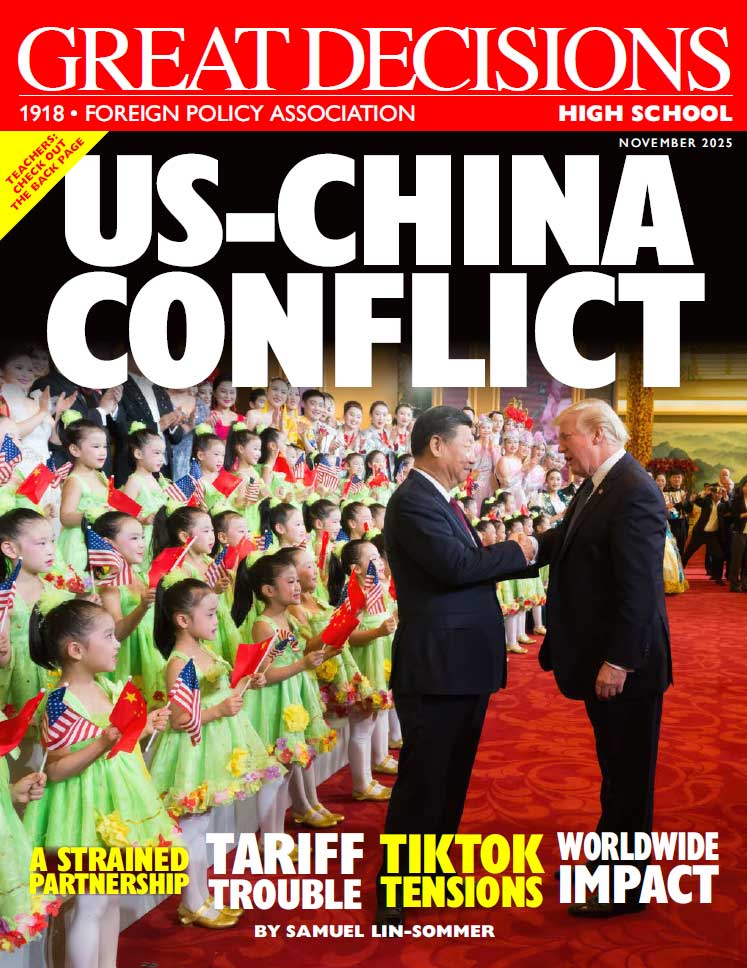
U.S.–China Relations: Competition or Cooperation? The U.S. and China stand at the center of today’s most consequential global relationship—one that shapes trade, technology, security, and the future of international leadership.Great Decisions: U.S.–China Relations, a free classroom resource from the Foreign Policy Association, helps students explore the history, tensions, and interdependence between these two nations through […]

Dive into the essential topics shaping our world with Great Decisions 2025 E-book editions! Whether you’re seeking to stay ahead in international trends or join engaging debates, Great Decisions 2025 is your passport to understanding. Find your preferred e-book format and retailer below to get started: Barnes and Noble – Read on your Nook or any compatible device.Kobo – For […]

