
This February 14, the Chinese New Year (based on the lunar calendar and marking the arrival of spring) was celebrated in Havana with performances by dancers and students of martial arts and other artistic displays in a celebration sponsored by the Havana Historian’s Office and the Cuban School of Wu Shu, Havana’s martial arts school.
Many people are surprised to learn that Cuba has a Chinatown (it does), but Chinese have been a part of the island’s history since the 19th century, when they were corralled in as indentured workers in order to fill the gap on sugar plantations after the end of the African slave trade. Between 1860 and 1875, huge waves of Chinese migrated from places like California, where they held a higher economic status but faced anti-Chinese sentiment and discriminatory legislation.
Chinese immigrants in Cuba numbered around 40,000 at their peak in the first half of the 20th century. For years, Havana’s Chinatown (barrio chino) was the largest and most robust of any in Latin America. After the revolution of 1959 and the dissolution of private enterprise, however, large numbers of Chinese—traditionally small-business owners—left Cuba, and today there are only an estimated 500 Chinese Cubans left on the island, a small minority. Still, Chinatown continues to cook and serve Chinese food, produce a biweekly Chinese language newspaper, teach martial arts and language and culture classes, and put on this Chinese New Year celebration annually.
Outsiders frequently hear of migrants from Cuba, but very rarely hear of the migrant communities in Cuba: this is a mere word of background on this important and lesser-known community on the island. For more, try The Chinese in Cuba, 1947-Now, by Mauro Garcia Triana and Pedro Eng Herrera. On the fiction side, Daina Chaviano’s novel La isla de los amores infinitos (also published in English as The Island of Eternal Love) describes the influence of Chinese immigration to Cuba. Zoe Valdes spins a beautiful yarn of a Chinese migrant family in Cuba through use of magical realism in La Eternidad del Instante.
(Photo from havanatimes.org)

Edited by G. John Ikenberry.Cover image download. Proposed Essay Topics 1) American Foreign Policy and the Future of Multilateralism Over the postwar decades, the United States played a leadership role in building multilateral regimes and institutions across a wide range of policy areas. It was a founder of the United Nations and champion of the […]
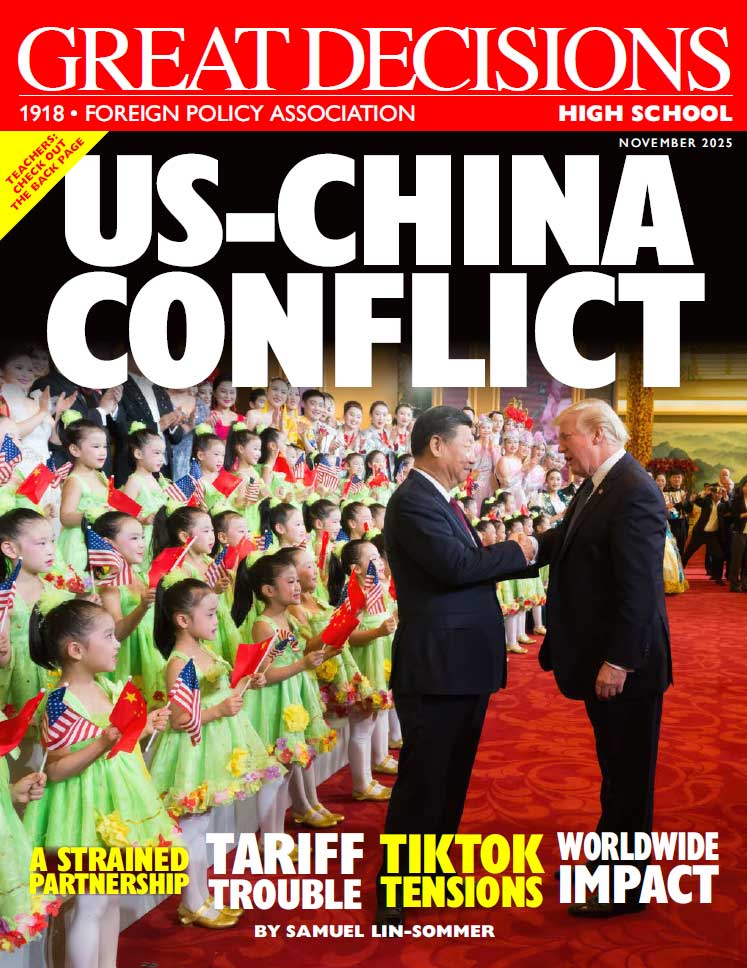
U.S.–China Relations: Competition or Cooperation? The U.S. and China stand at the center of today’s most consequential global relationship—one that shapes trade, technology, security, and the future of international leadership.Great Decisions: U.S.–China Relations, a free classroom resource from the Foreign Policy Association, helps students explore the history, tensions, and interdependence between these two nations through […]
Dive into the essential topics shaping our world with Great Decisions 2025 E-book editions! Whether you’re seeking to stay ahead in international trends or join engaging debates, Great Decisions 2025 is your passport to understanding. Find your preferred e-book format and retailer below to get started: Barnes and Noble – Read on your Nook or any compatible device.Kobo – For […]

